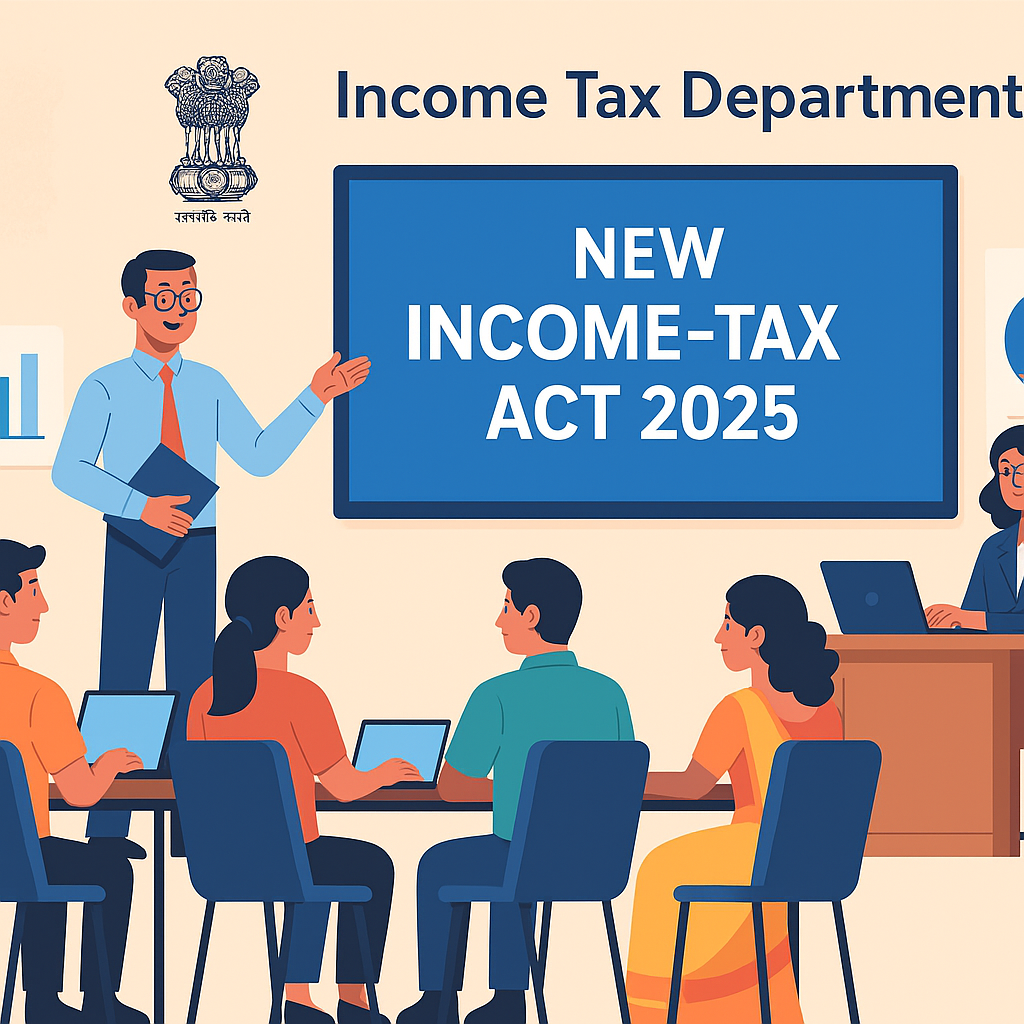

The Indian tax system is entering a historic phase with the introduction of the new Income-tax Act, 2025 which is scheduled to come into effect from 1 April 2026. This new law will replace the current Income-tax Act, 1961 which has governed India’s direct taxes for more than sixty years. To ensure that taxpayers, businesses, professionals and tax officials understand the new provisions well in advance, the Central Board of Direct Taxes (CBDT) has planned a massive nationwide awareness and training campaign.
Why This Outreach Is Important
The new Income-tax Act is not just a minor update – it is a complete restructuring of how income tax will be administered in India. Many definitions, compliance requirements and procedural rules are being updated or simplified. Because of this, CBDT wants to make sure that both taxpayers and tax officers are ready before the new law is implemented. A smooth transition will reduce confusion, prevent mistakes and help everyone adapt to the changes without stress.
Outreach Programme Starting January 2026
Beginning January 2026, all Principal Commissioners of Income Tax across the country have been instructed to conduct outreach programmes four times every quarter. These programmes will include seminars, workshops, interactive meetings and awareness sessions. They will be open to individual taxpayers, salaried employees, small businesses, professionals like CA/CS, industry associations, tax consultants and departmental staff.
CBDT has already identified and trained a group of “master trainers.” These trained officers will help guide others in the department so that information shared across the country is uniform and correct. This step is crucial because the new Act introduces several changes that officers will have to implement while handling assessments, processing returns, issuing refunds or responding to taxpayer queries.
Major Changes in TDS and TCS Rules
One of the biggest reforms in the new Act is the complete restructuring of Tax Deducted at Source (TDS) and Tax Collected at Source (TCS). Under the existing 1961 Act, there are 71 different sections related to TDS and TCS. These create complexity especially for businesses that have to deduct tax under different categories and keep track of multiple sections.
Under the new Income-tax Act, 2025, these 71 sections have been merged into just 10 broader and simpler sections. This change aims to make the compliance burden lighter, reduce confusion for deductors and deductees and make tax administration smoother.
Additionally:
- New TDS/TCS challan formats will be introduced.
- Return filing forms will be redesigned.
- The tax department’s systems, including the e-filing portal, AIS/26AS and refund processes, will be upgraded to match the new law.
These changes will become effective from 1 April 2026, meaning all monthly and quarterly filings from that date onward will follow the new formats.
Industry Feedback and Suggestions
Industry associations and professional bodies have welcomed the simplification of TDS/TCS. Many experts believe that a reduction in sections will reduce errors and improve compliance. However, some organisations have also recommended that certain outdated requirements – like issuing separate TDS certificates for each payment – should be removed. Since today’s systems allow real-time tax credit tracking, they argue that such paperwork only increases the workload for businesses.
This feedback is expected to be considered as CBDT continues to finalise procedures and rules under the new Act.
What Taxpayers Should Expect
With the introduction of the new law, taxpayers should be prepared for several changes:
- Definitions of income and allowances may change.
- Filing procedures may be updated.
- Deduction rules may be modified.
- New forms and formats will be used from the next financial year.
- There may be changes in how assessments, appeals, and penalties are handled.
The CBDT outreach programme will help clarify all these aspects. Taxpayers are encouraged to attend the sessions organised in their city or jurisdiction to understand how the new rules will affect their filing and reporting requirements.
A Significant Step in India’s Tax Reforms
The rollout of the new Income-tax Act, 2025 is one of the biggest reforms in India’s direct tax history. By taking early steps to train officials and educate taxpayers, CBDT aims to ensure that the transition happens smoothly and without disruption. As the implementation date approaches, more updates, draft rules and notifications are expected.
For now, taxpayers should stay informed, participate in awareness sessions and keep track of announcements from CBDT and their local tax offices.
About the Author