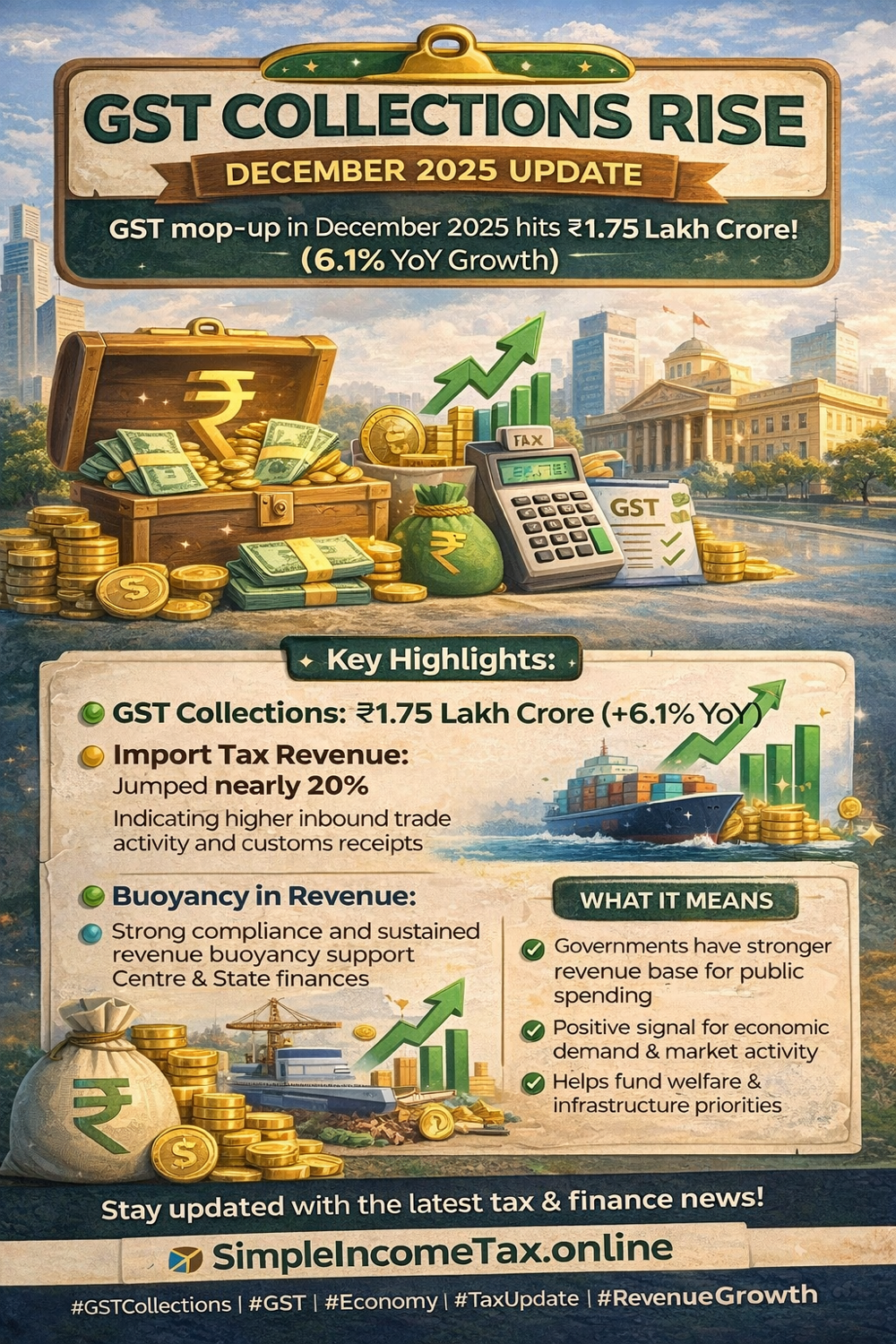

India’s Goods and Services Tax (GST) collections showed steady growth in December 2025, reflecting continued economic activity and improved tax compliance. As per official data, gross GST collections increased by 6.1% year-on-year to ₹1.75 lakh crore, compared to the same month last year. This growth highlights the resilience of the Indian economy amid global uncertainties.
Strong Growth Driven by Import GST
One of the key reasons behind the rise in GST revenue was a sharp increase in import-related GST (IGST). Revenue from imports grew by nearly 20%, reaching around ₹52,000 crore in December. This indicates higher import volumes and stronger trade activity, which significantly supported overall GST collections during the month.
In contrast, GST revenue from domestic transactions showed a relatively modest growth of around 1–2%, suggesting that while domestic consumption remained stable, imports played a larger role in boosting tax receipts.
Net GST Revenue After Refunds
After adjusting for refunds issued during the month, net GST revenue stood at approximately ₹1.45 lakh crore, registering a 2.2% increase compared to December last year. Higher refunds, particularly in domestic sectors, slightly moderated the net growth figure, but overall collections remained healthy.
Refunds are an important part of the GST system as they ensure liquidity for exporters and businesses. An increase in refunds often reflects higher business activity and exports.
Performance So Far in FY 2025–26
Looking at the broader picture, gross GST collections from April to December 2025 have crossed ₹16.5 lakh crore, marking a growth of about 8.6% over the same period in the previous financial year. This steady rise indicates better compliance, wider tax base, and increasing formalisation of the economy.
Consistent GST collections are crucial for meeting government expenditure needs, funding infrastructure projects, and maintaining fiscal discipline.
Impact on States and Union Territories
GST collections also brought positive news for states and Union Territories. After settlement, GST revenue shared with states grew by around 6% in December. Major states such as Maharashtra, Gujarat, Tamil Nadu, Karnataka, and Uttar Pradesh reported higher inflows, strengthening their fiscal position.
Stable GST revenue helps states manage welfare schemes, development projects, and routine administrative expenses more effectively.
What This Means for Taxpayers and Businesses
For taxpayers and businesses, rising GST collections indicate:
- Improved compliance and reporting
- Greater use of digital systems and e-invoicing
- Reduced scope for tax evasion
- A more transparent indirect tax system
For the government, strong GST numbers provide confidence in revenue projections ahead of future budgets and policy decisions.
The 6.1% rise in GST collections in December 2025 is a positive indicator for India’s economy. While import-related taxes were the main growth driver during the month, overall GST performance remains stable and encouraging. As economic activity continues and compliance improves, GST is expected to remain a strong pillar of India’s tax system in the coming months.
About the Author