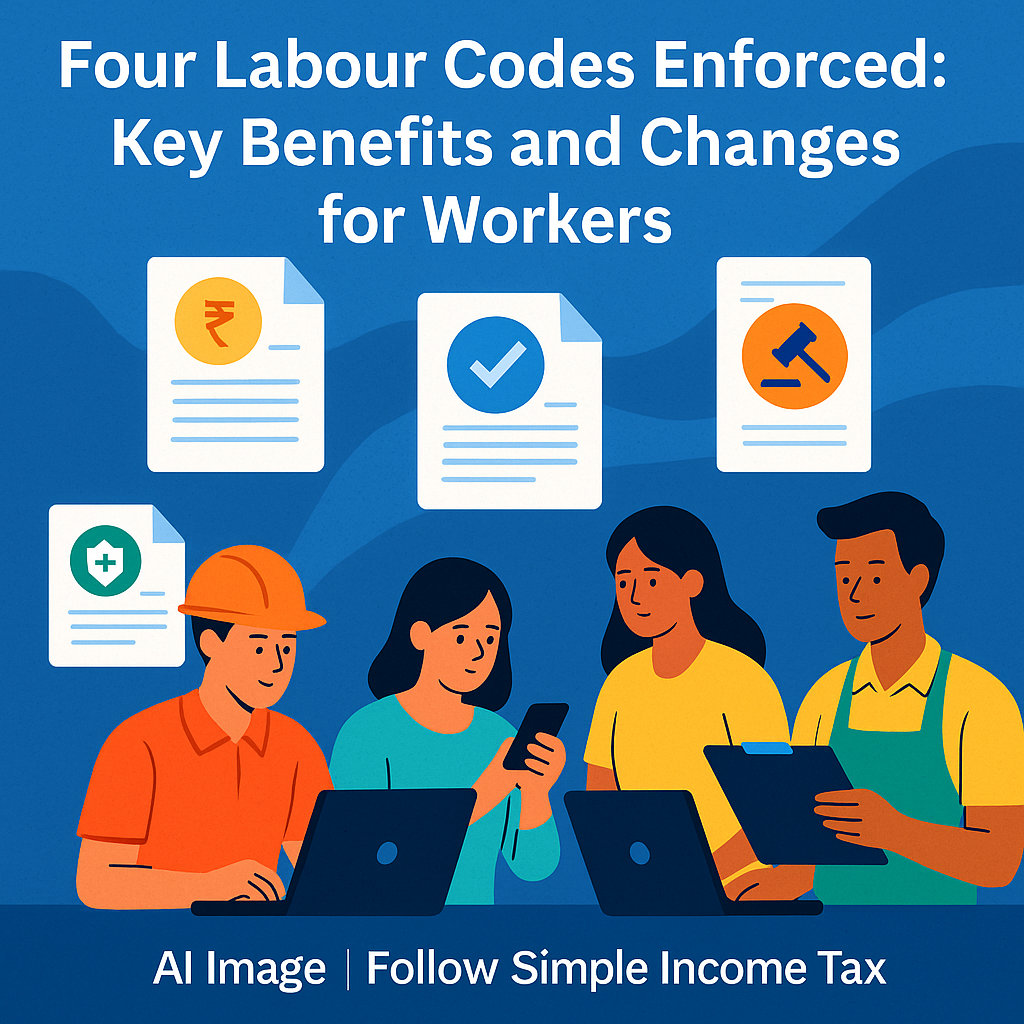

India has entered a new chapter in labour law. As of 21 November 2025, four landmark laws — the Code on Wages, 2019, Industrial Relations Code, 2020, Code on Social Security, 2020 and Occupational Safety, Health & Working Conditions (OSHWC) Code, 2020 — have come fully into force, replacing 29 existing labour-laws across the country.
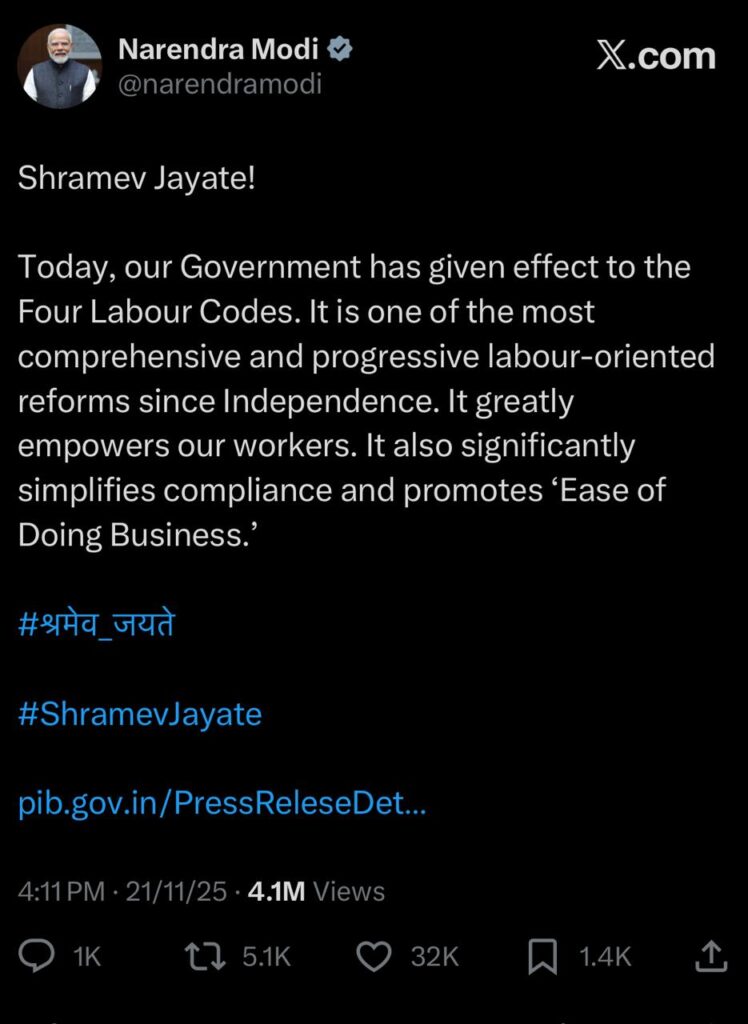
Commenting on the reform, Prime Minister Narendra Modi shared on X:
What’s changed – the big picture
The labour framework in India has long been fragmented, with dozens of laws dating to mid-20th century and earlier. The new codes aim to simplify compliance, bring workers under one modern structure and align the system with the needs of a digital and gig-based economy.
Among the major structural shifts:
- Mandatory appointment letters for all workers, ensuring job clarity and formal recognition.
- Universal social-security coverage, now intended to extend to gig workers, platform workers and migrant/contract labour.
- A guaranteed minimum wage and a commitment to timely wage-payment across industries and worker categories.
- Streamlined compliance: single registration, single licence and single return to replace multiple filings under separate laws.
Who benefits? Key sectors and workers
The reforms are designed to benefit workers who were historically under-protected:
- Fixed-term employees (FTEs): They will now, in many cases, enjoy the same rights as permanent employees, including gratuity after just one year.
- Gig & platform workers: For the first time they have legal recognition including aggregator contributions and portability of benefits.
- Contract labour & women workers: Better protections, gender-neutral access (including night shifts in many jobs), equality in pay for equal work.
- Youth, MSME‐workers, traditional sectors (e.g. beedi, plantation, textile): All these groups are brought under the protective umbrella of the new codes.
What workers must know – your checklist
If you’re an employee (formal, informal, gig or contract) here are some action-points:
- Ensure you have a written appointment letter outlining your role, wage, working hours.
- Check if you’re covered under social security schemes (PF, ESIC or equivalent) and if portability of benefits is possible.
- For contract/gig/platform jobs, verify that your terms of engagement align with the new definitions under the codes.
- Wage payment: Employers are now legally bound to satisfy minimum wage norms and pay wages timely.
- If you’re a woman worker, review your rights under the new framework (e.g., night shifts with conditions, equal pay, rights to safe workplaces).
- For employers and payroll teams: Transitioning to the new codes means re-check your compliance matrix: registration, licenses, returns, record-keeping and worker-classification.
Implications for tax/filing and employer-compliance
- The shift to formalisation means greater transparency in worker status, more accurate wage records and therefore clearer implications for tax deductions, PF/ESIC contributions.
- Employers may need to revisit their payroll structures, especially for fixed-term, contract, and gig-workers.
- For individual taxpayers, this also means the wage component, social security benefits and rights are better defined — which may affect how income is treated, what deductions/benefits apply.
- The consolidation of laws may lead to fewer overlapping filings/returns for employers, but may also increase enforcement — so staying compliant is key.
The implementation of these four labour codes is arguably one of the largest overhauls of India’s workforce regulation since independence. It reflects the government’s intent to create a future-ready workforce, promote ease of doing business and offer stronger protections for workers.
For you, whether you’re employer or employee: staying informed, ensuring your documentation is in order and verifying that your employment rights are fully respected will help you make the most of these reforms. At Simple Income Tax, we’ll keep you updated on how these changes interplay with income tax, payroll and compliance.
About the Author


1 thought on “New Labour Era Begins: Four Labour Codes Take Effect”