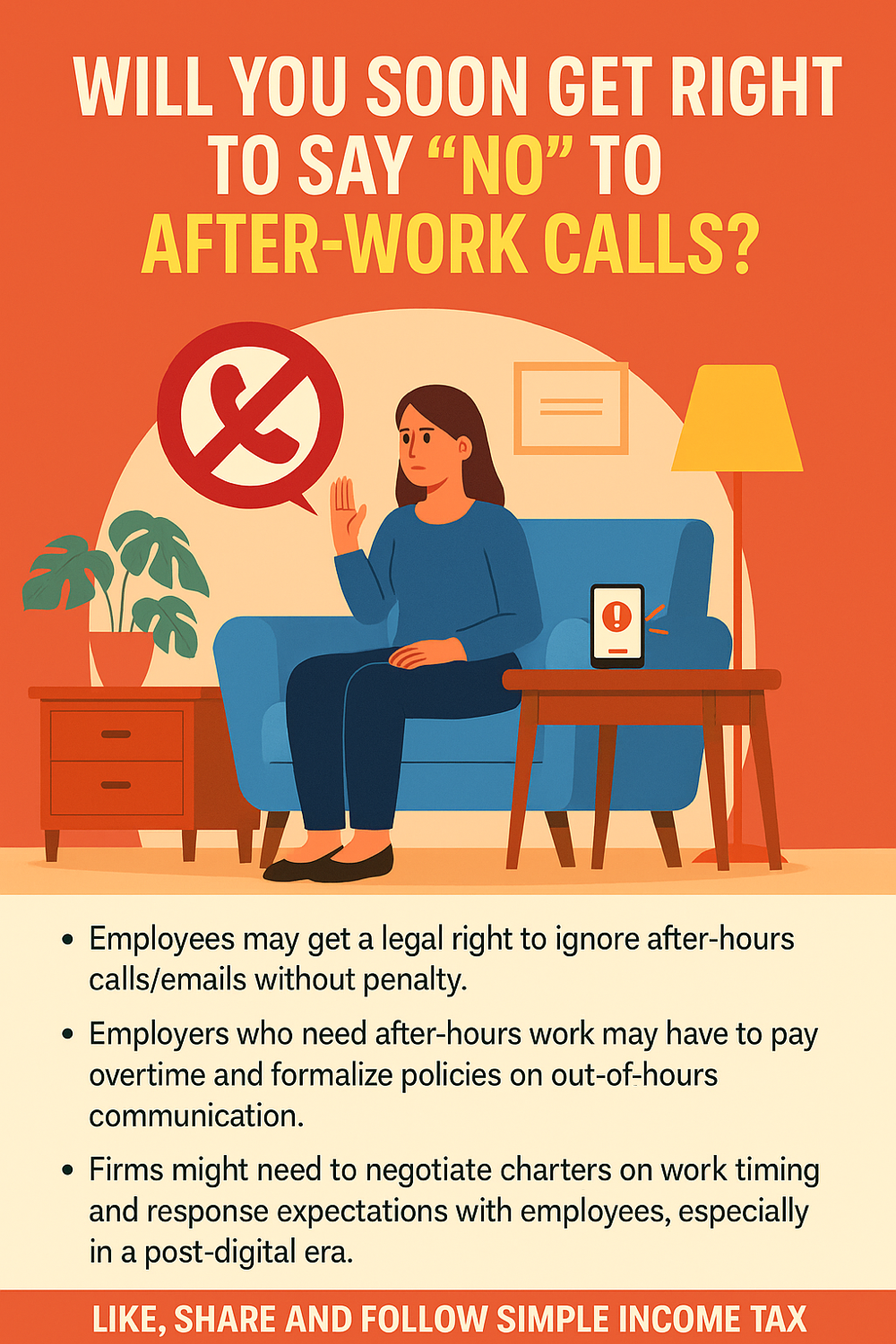

In a major move towards protecting workers’ mental health and personal time, the Right to Disconnect Bill, 2025 was introduced in the Lok Sabha on 6 December 2025 by Supriya Sule. The bill aims to legally grant every employee the right to disconnect — meaning no mandatory response to work-related calls or emails after office hours or on holidays.
Under the proposed law, employees will have the freedom to refuse after-hours communication without fear of disciplinary action. If work does need to be performed beyond official hours (with prior agreement), the bill calls for overtime pay at normal wage rates.
The Bill also proposes setting up an Employees’ Welfare Authority to oversee implementation and ensure compliance especially for firms with more than 10 employees. This is a response to growing concerns about burnout, stress and “tele-pressure” arising from constant digital connectivity.
Although private member bills — like this one — seldom become law, the Right to Disconnect Bill has sparked a nationwide conversation about work–life balance, the mental well-being of employees and modern workplace norms.
✅ What This Means for You (Employees & Employers)
- Employees may get a legal right to ignore after-hours calls/emails without penalty.
- Employers who need after-hours work may have to pay overtime and formalize policies on out-of-hours communication.
- Firms might need to negotiate charters on work timing and response expectations with employees especially in a post-digital era.
About the Author