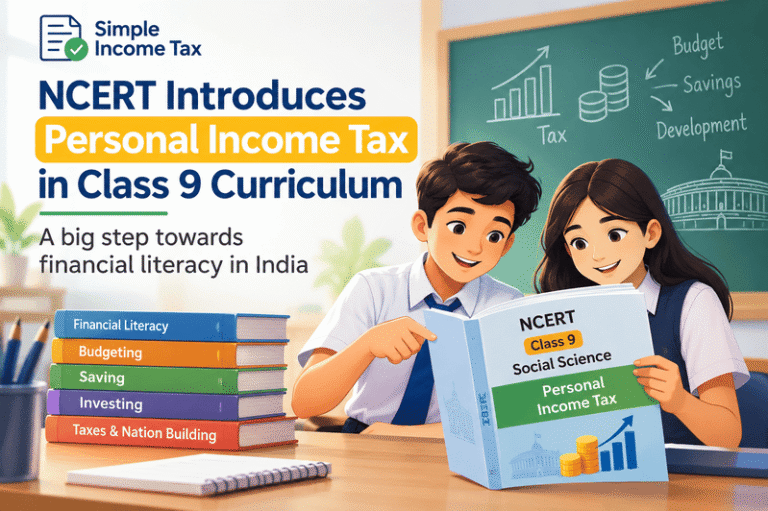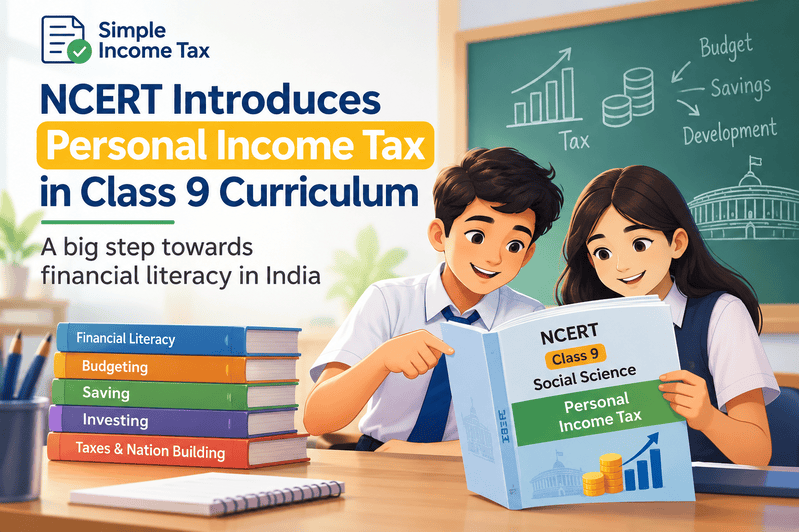

In a significant step towards promoting financial literacy, the National Council of Educational Research and Training (NCERT) has introduced a chapter on Personal Income Tax in the Class 9 Social Science curriculum. The new chapter aims to help students understand the basics of taxation, the importance of paying taxes, and how tax revenue contributes to the nation’s development.
According to media reports, the chapter primarily explains the New Tax Regime, giving students an early introduction to the country’s direct tax system. This marks one of the first instances where school students will learn about Personal Income Tax as part of their formal education.
Why Is This Change Important?
For many people, Income Tax remains a subject they encounter only after starting their careers. By introducing Personal Income Tax at the school level, students can develop financial awareness much earlier.
Understanding taxation helps students learn:
- Why citizens pay taxes.
- How governments use tax revenue for public welfare.
- The responsibilities of taxpayers.
- Basic financial planning and budgeting.
- The role of taxes in nation-building.
Financial literacy is a life skill, and introducing these concepts during school education can help students become more informed and responsible citizens.
What Is Personal Income Tax?
Personal Income Tax is the tax paid by individuals on their taxable income, subject to the provisions of the Income Tax law. The amount payable depends on factors such as income level, applicable tax rates, exemptions, deductions, and the tax regime chosen where applicable.
Taxes collected from individuals help the Government fund essential public services, including:
- Education
- Healthcare
- Roads and highways
- Railways
- Defence
- Public welfare schemes
- Digital infrastructure
Every responsible taxpayer contributes to the country’s growth through timely payment of taxes.
Focus on the New Tax Regime
Media reports indicate that the NCERT chapter focuses on the New Tax Regime, which has become the default tax regime for many taxpayers.
The New Tax Regime generally offers:
- Simplified tax slabs.
- Lower tax rates for many taxpayers.
- Fewer exemptions and deductions.
- Easier tax computation.
However, students should also understand that the Income Tax system has evolved over time and that taxpayers may need to understand different tax provisions depending on the applicable law and assessment year.
Learning the broader principles of taxation is more valuable than memorizing tax rates, as tax laws may change periodically through Finance Acts.
Why Financial Literacy Should Begin in School
Introducing Personal Income Tax at the school level has several long-term benefits.
Students who understand taxation early are more likely to:
- Develop responsible financial habits.
- Appreciate the importance of tax compliance.
- Understand salary structures and deductions.
- Avoid common misconceptions about Income Tax.
- Become financially informed citizens.
Financial education is no longer optional in today’s digital economy. Whether someone becomes an entrepreneur, professional, salaried employee, or freelancer, a basic understanding of taxation is beneficial.
A Practical Example
Suppose a person earns a salary from employment.
Before receiving the final salary, Income Tax may be deducted as per the applicable provisions. The taxpayer then files an Income Tax Return (ITR), reports income, claims eligible benefits wherever applicable and pays any remaining tax or receives a refund, if due.
Understanding this process helps students connect classroom learning with real-life financial situations.
Should Students Learn More Than Just Tax Calculation?
Absolutely.
The objective of tax education should extend beyond calculating tax liability. Students should also understand:
- Why taxes exist.
- Rights and responsibilities of taxpayers.
- Importance of filing Income Tax Returns.
- Honest tax compliance.
- How public infrastructure is funded.
These concepts build civic responsibility alongside financial knowledge.
Frequently Asked Questions (FAQs)
1. Why has NCERT introduced Personal Income Tax in Class 9?
The objective is to improve financial literacy and help students understand the role of taxation in society from an early age.
2. Does this mean Class 9 students will have to calculate complicated taxes?
No. The chapter is intended to introduce basic concepts rather than advanced tax calculations.
3. Why is financial literacy important?
Financial literacy helps individuals make informed decisions regarding saving, investing, taxation, and responsible money management.
4. Is the New Tax Regime covered in the chapter?
According to media reports, the chapter primarily discusses the New Tax Regime.
5. Will tax laws remain the same forever?
No. Income Tax provisions are amended from time to time through Finance Acts. Students should focus on understanding the principles of taxation rather than memorizing specific tax rates.
Conclusion
The introduction of Personal Income Tax into the Class 9 curriculum is a welcome initiative towards building a financially aware generation. When students understand how taxation supports public services and national development, they become more responsible citizens and future taxpayers.
While the inclusion of taxation in school education is a positive development, the ultimate goal should be to promote comprehensive financial literacy that enables students to understand not only tax rules but also the broader importance of responsible financial decision-making.
As India continues to strengthen financial awareness among its youth, initiatives like these can play a meaningful role in preparing students for real-world financial responsibilities.
Disclaimer: This article is based on publicly reported information regarding the NCERT curriculum. Readers should refer to the official NCERT textbooks and Government notifications for authoritative educational content.
Related Article in Simple Income Tax
TDS Under the Income Tax Act, 2025
Visit Official website of Income Tax Department
About the Author